About the Artist
Tim Burns
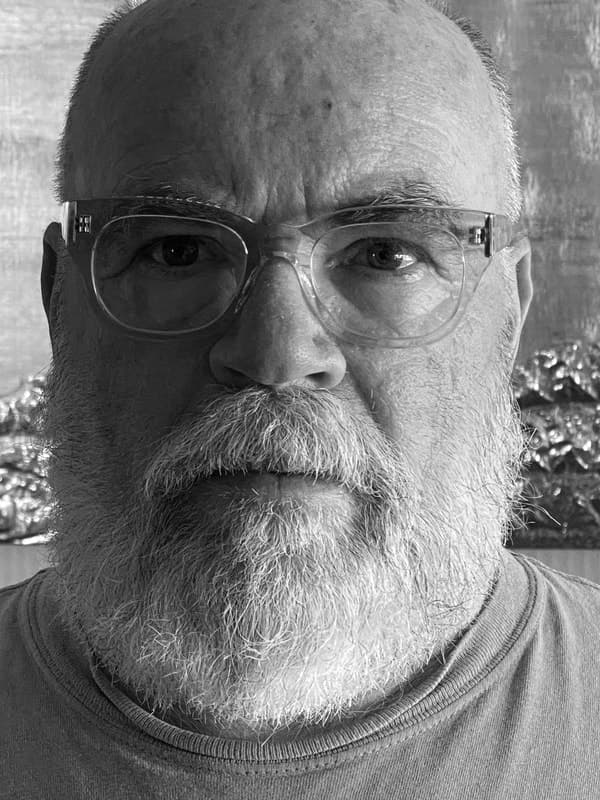
Tim Burns is a fine-art photographer who looks for the abstractions nature makes on its own. Trees lit from behind, ocean and sky meeting along the West Marin coast, light caught in drops of water: these are the moments he waits for, and the moments his camera holds on to. His path to photography began in clay. Tim grew up in Detroit, Michigan, and studied at Oakland Community College under the Raku artist and author Robert Piepenburg. He then came west, and the San Francisco Bay Area has been his home since 1980. In 1981 he graduated from the San Francisco Art Institute with a BFA in Ceramic Sculpture, where he studied with Richard Shaw. That training in form, surface and material still shows in the way he thinks about an image as an object, something with depth and presence on the wall. For the last 22 years Tim has worked mainly in digital photography and photo encaustics. He keeps studios in Bodega Bay and San Francisco, and much of his work is made on the coast at Bolinas. From Duxbury Point he photographs fleeting moments, a dance between ocean, fog and light, which he calls his daytime dreamscapes. His work is organized into series with names of his own: Abstractions in Nature, Rothko Seascapes, Land of A Thousand Birds, Ocean and Sky, flowers, earth, surfer art, photo encaustics and, most recently, the Planets, large round metal prints in 50-inch and 30-inch diameters. The Rothko Seascapes, layers of sun, sea and sky blurring into one another, caught the attention of Flavorwire, where Judy Berman wrote about them as breathtaking photos of seascapes that recall the paintings of Mark Rothko. The series was also covered by OEN. Land of A Thousand Birds, made at Duxbury Point, was shown at the Bolinas Museum in October 2013, curated by Jennifer Gately. In 2015 his work appeared in "WATER" at the Stinson Beach Gallery. Tim is a familiar face at open studios. He has taken part in Coastal Marin Open Studio, Art Span SF Open Studios at the Art Saves Lives Gallery on Castro Street in San Francisco, and Art At The Source in Petaluma, and he hosts an annual Thanksgiving Open Studio in Bolinas. He showed "Conversations: Harmony of Change" with Arline Mathieu at the Farm Stand Gallery in Bolinas, and his piece "Worlds That Never Were" was part of the Arts Transform and Heal show at Commonweal in Bolinas. He is represented by Desta Gallery, and his work "Longing for More" was offered in the Face to Face auction in Sonoma. His prints are made on Fuji Crystal Archive paper mounted behind acrylic glass, which gives them depth and a glow that seems to come from within. For Tim, creating brings a sense of healing, pure joy and satisfaction, and many viewers feel that same calm when they stand in front of his work. "I have noticed often when photographing, the first photo is the best shot." — Tim Burns
“Abstractions in Nature — ocean, fog and light from the West Marin coast, by photographer Tim Burns.”
The Process
Inside the Studio
The Painting Process
The Photography Process Tim Burns does not set up his pictures. He looks for the abstractions nature creates on its own and tries to be ready when they appear: trees lit from behind, scenes seen through glass, light reflected from drops of water. For the last 22 years his main tools have been the digital camera and the photo encaustic. Much of the work begins at Duxbury Point in Bolinas, on the West Marin coast. There he waits for the moments when the fog lifts for an instant and the sun spotlights a patch of ocean while birds dive in and around the surface, with only the sound of the reef and the wind around him. He calls these images his daytime dreamscapes, a dance between ocean, fog and light. The same stretch of coast gave rise to his series Land of A Thousand Birds and to the Rothko Seascapes, where sun, sea and sky dissolve into soft bands of color. Tim trusts the moment. His strongest work, he says, comes when he doesn't think about it and lets his creative core take over. He has noticed that the first photo is often the best shot; adjusting with the next frames rarely beats it. The finished image matters to him as an object as much as a picture, which is no surprise from an artist trained in ceramic sculpture. His prints are made on Fuji Crystal Archive paper mounted behind acrylic glass, in sizes such as 16 x 24 and 30 x 45 inches. The acrylic adds depth and luminosity, so the images seem to glow from within. For his Planets series he moved to metal, with large round metal prints in 50-inch and 30-inch diameters. In his photo encaustics, such as Reflections on Water from 2010, he brings photography together with wax. For Tim, making this work brings a sense of healing, pure joy and satisfaction, and that calm is what many people feel in front of it.
Where to Find the Work